There’s a version of Italy most travellers know well…

…queues curling around the Colosseum, the crowds flowing through Florence, the ferries tracing the Amalfi Coast – the version that usually features people travelling together. 

And then there’s another Italy – the quieter one – the one that is typically explored solo…until it isn’t. 

This is the Italy that lives in trattorias where locals eat on a Tuesday night and invite solo travellers to the table, and in farmhouse kitchens where pasta is still rolled by hand and offered to travelling guests. What is Italy famous for? Food, yes – but what makes it special is how it brings people together. For those travelling alone, in search of that true Italian experience, that changes everything.

What to expect from a typical Italian meal 

In Italy, meals don’t tend to follow a clock, but they do follow a rhythm. Here’s how a traditional meal goes…

  • Antipasti – Small bites to awaken the appetite: think olives, cured meats, bruschetta, or marinated vegetables.
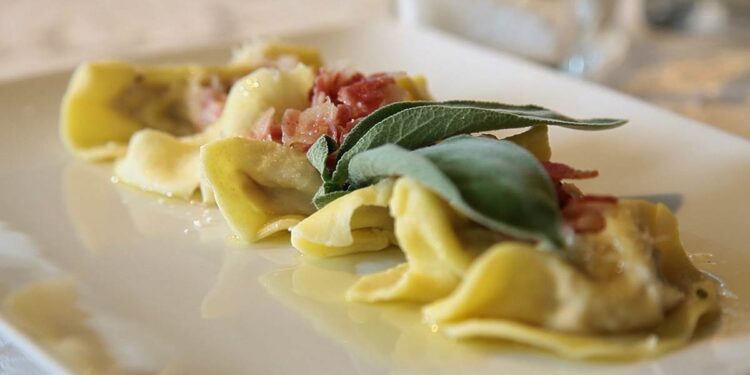
  • Primi  – The first course, usually pasta or risotto. Filling, comforting, and never rushed.
  • Secondi –  The main course: fish, meat, or poultry.
  • Contorni – Simple side dishes of seasonal vegetables or salad, served alongside the secondi.
  • Dolci & Digestivi – To finish, something sweet, an espresso, and maybe a digestivo like limoncello or grappa.

This isn’t for show, though, it’s simply how Italians eat, whether alone or around a table of eight. The pace is intentional: the goal isn’t just to eat, but to be together.

If you’re travelling solo, this is what you can expect:

  • Long, shared tables where conversation flows as easily as the wine.
  • Guided tastings and small-group meals that bring travellers and locals together.
  • Vineyard lunches, family kitchens, and neighbourhood trattorie, often with no menu, just whatever’s been cooked that day.

With Magari, you step straight into that world. You arrive solo, but you never dine alone, the table itself becomes your company.

Curious how locals eat without a menu? Take a look at our article exploring what is Italy famous for – food you won’t find on a menu.


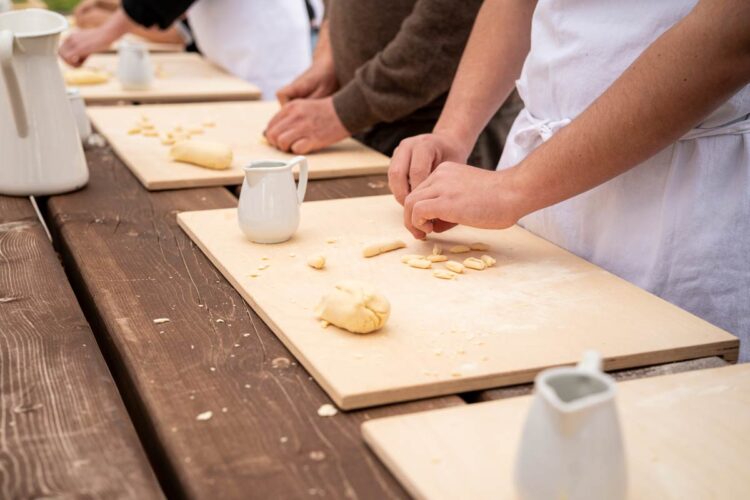
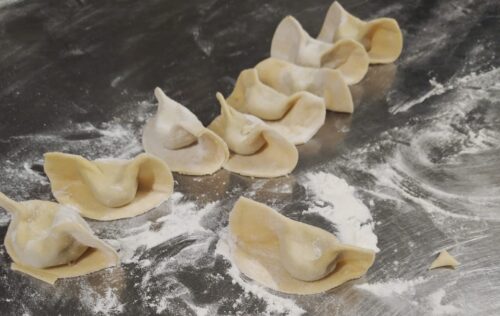
Pasta making in Italy

Why solo doesn’t feel solo with Magari

In Italy, hospitality is how people show they care. Conversations start easily – a question about the wine, a joke about the afternoon heat, or even someone at the table next to you commenting on your meal. By your second visit, you might be on first-name terms with the waiter. 

Travelling with Magari feels the same way. You arrive on your own, but soon you’re part of the easy company that forms over shared meals, slow afternoons, and plenty of laughter. One day, it’s a pasta lesson laid out under fruit trees in a family orchard; another, mozzarella made by Nonna in a masseria kitchen.

You still have your own room, your own quiet, your own pace. And then, at the right moments, you come together: to sip a local wine, share a plate, hear a story that’s been told here for generations. You don’t have to try to “meet people” when you travel with Magari, connection arrives on its own – poured, plated, and shared.

The regions where solo travel is encouraged…

Italy is a country made for solo travellers, especially those who love food. Each region has its own rhythm, flavours, and way of welcoming you in. Here’s how to experience three of the best at your own pace.

Tuscany

In Tuscany, the days run long and full, and so do the lunches. Meals can easily stretch into late afternoon, with a second bottle of wine arriving before you even notice.

If you’re travelling solo here:

  • Go slowly. Tuscany isn’t about ticking off landmarks, it’s about wandering between hill towns and finding a trattoria that feels like it’s been waiting for you.
  • Eat locally. Ask for the menù del giorno (the daily menu) and you’ll likely get handmade pasta, local olive oil, and maybe a story about who made the wine.
  • Join a tasting. Vineyard tours and countryside cooking classes are small by nature, making them an easy way to meet other travellers and locals without
  • Want wine and food that feel like history and home? Check out our story on La Vendemmia in Tuscany, where family vineyards show how classic Italian dishes and wines are perfectly paired.

Umbria

Often called Italy’s green heart, Umbria moves to a slower beat. The towns are smaller, the crowds fewer, and the welcome feels personal.

 If you’re travelling solo here:

  • Start your day early. Watch a hill town wake up over coffee – the locals will likely say buongiorno before you’ve even found your seat.
  • Linger over lunch. Umbrians take their time; a two-hour meal is normal. Order a glass of wine, put your phone away, and let conversation happen naturally.

Stay central. Choosing a small family-run inn or agriturismo means you’ll often dine where you stay (and be invited to join the table!)

Puglia

Puglia is just pure warmth (in every sense!)  the light, the people, the food that’s meant to be passed around. Generosity here comes baked into every dish.

If you’re travelling solo here:

  • Eat where the locals do. Skip the printed menu and ask, “Cosa mi consiglia oggi?” ( “What do you recommend today?” ) You’ll almost always get what’s best and freshest.
  • Follow the rhythm. Dinner doesn’t start until the evening air cools, so use the late afternoon for a seaside walk or aperitivo – often, that’s where new friendships begin.


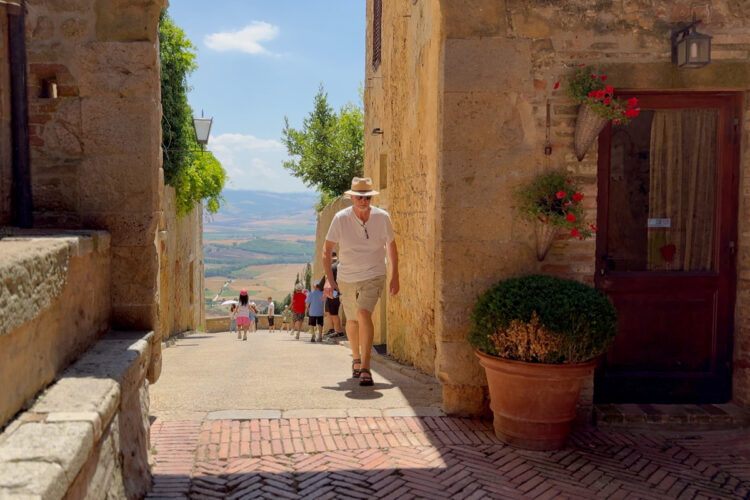
A man walking in Pienza, Italy
Travelling solo with Magari

In each of these regions, you’ll find the same easy rhythm that defines Italian life: slow mornings, shared tables, and unhurried meals that turn strangers into companions. As twee as it may sound, with Magari, you travel at your own pace, and yet, you’re never really alone.

And these are the best Italian towns in those regions…

What makes Magari work for solo travellers isn’t just the small groups, it’s the places.

We choose smaller, walkable towns where it’s easy to slow down and feel comfortable on your own.

Here are a few we return to often (and what you can expect on a Magari tour)…

Lecce (Puglia)

Is Lecce worth visiting? Spend one evening in its piazzas and you’ll know. Honey-coloured Baroque buildings glow at sunset; the squares fill as the day cools. You wander, sit, watch – soon, someone starts talking to you.

  • What to eat (cucina salentina): Ciceri e Tria (chickpeas with fried/boiled pasta), Rustico leccese (mozzarella + béchamel pastry), Pasticciotto (custard tart, best warm).
  • Where to start: Evening stroll around Piazza Sant’Oronzo and the Roman amphitheatre; grab a stool at a bar for aperitivo.
  • How to order: Ask for “cosa c’è di fresco oggi?” to get what’s just been made.
  • Solo tip: Sit at the counter or a high table – easy to chat, easy to move on.

With Magari: Easy first stop; a short city walk, casual bites, and the group feels like company by the first meal.


man in Montepulciano making mosaic souvenirs

Ostuni (Puglia)

There’s no pressure here to do anything, which makes it the perfect pause in a Magari journey. You soak up the quiet, then gather again for an olive-oil tasting, stories from the family who makes it, and that easy feeling of being welcomed back in.

  • What to do: Slow loop through the old town, viewpoints near the cathedral, ceramics workshops, small wine bars.
  • Good times of day: Early morning for quiet lanes; golden hour for photos and a relaxed aperitivo.
  • What to taste: Local rosato, burrata, frisella, and simple seafood.
  • Solo tip: Pick a café on a corner – people-watching turns into easy conversation.

With Magari: Regroup for an olive-oil tasting with the family producers; stories, sips, and a gentle re-entry to the group.

Orvieto (Umbria)

How many days in Orvieto is one of those questions that only gets asked by people who already sense what the town is like. You don’t come here to rush. You come here to settle…

  • First steps: Duomo façade up close, lanes off Corso Cavour, artisan workshops.
  • Take it slow: Coffee in a side-street bar, a small gallery, a quiet viewpoint, then another wander.
  • What to drink: Orvieto Classico (crisp local white) with simple Umbrian dishes.
  • Solo tip: Choose a trattoria with a short menu and daily specials; ask for a calice (glass) and let the host guide you.

With Magari: Arrive together for a short orientation, then time for your own moments before meeting for lunch in a tufa-carved restaurant.

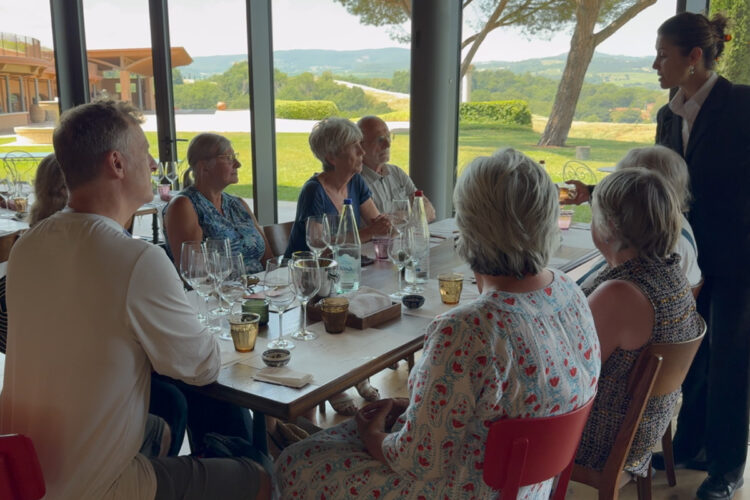
Small group at a wine tasting in Tuscany Bandino

Why small groups can feel more like company, than crowd

There’s a type of travel made for solo travellers who don’t want to be completely alone – they just want the right kind of company. Not awkward group activities, not total isolation, but something in between: friendly company that gives you space to be yourself.

Small group tours in Italy, done right, hit that sweet spot. At Magari, we’ve spent years getting to know the people who open their homes, masserie, and trattorias to our travellers – invitations you won’t find online. You might roll pasta with a Puglian nonna, share wine at a Sicilian farm where three generations still work the land, or taste olive oil pressed that morning while the farmer talks you through the harvest.

Want to see how it feels? Browse our Italy holiday packages and explore trips that let you travel solo, share meals, and make connections – all at your own pace. When you’re ready to plan your own small-group adventure, get in touch and we’ll help you make it happen.

For behind-the-scenes stories and travel tips from Italy, visit our blog – and don’t forget to subscribe to our newsletter  for the latest updates on our tours.

Buone vacanze!

Read Other Stories

We're here to help

Get in touch

Charlotte Vickerstaff

We're here to help

Close form
Magari Tours
Privacy Overview

This website uses cookies so that we can provide you with the best user experience possible. Cookie information is stored in your browser and performs functions such as recognising you when you return to our website and helping our team to understand which sections of the website you find most interesting and useful.