https://www.magaritours.com/wp-content/uploads/2024/08/438676327_122145191696119404_7149789704513336790_n-e1724855079409-500x316.jpg
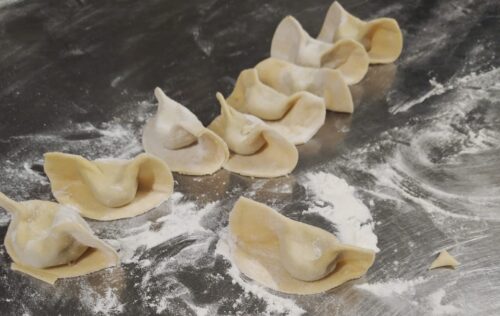
Half-moon shaped ravioli of casoncelli
How to make pasta like an Italian
Read More
Assisi is far more than its famous Basilica – it’s one of Umbria’s most beautiful hill towns, filled with quiet streets, golden stone, and sweeping valley views. That’s why Assisi is a highlight of Magari’s Heart of Umbria journey: rich history, real atmosphere, and time to truly walk the town.
You’ve heard the name – St Francis, the Basilica, maybe something about pilgrims. But Assisi is quite a bit more than that – it’s one of Umbria’s most beautiful hill towns, wrapped in honey-coloured stone and medieval quietness, with views set across a valley that seems to stretch forever.
Most visitors come for the Basilica, but wander the streets of Assisi and you’ll discover something deeper: locals chatting in sunlit piazzas, quiet lanes leading to hidden churches and secret viewpoints, and sunsets that turn the entire town golden. This is Assisi off the main path – this is Magari’s Assisi!
At Magari, we include Assisi in our Heart of Umbria journey because it captures the region at its best: beauty, history without crowds, and an atmosphere that makes you want to stay longer than planned. Here, you’ll learn what to explore beyond the Basilica, how to navigate the town, tips for visiting, and the best ways to experience the town at your own pace.
Magari guests on the Heart of Umbria tour reach Assisi by private coach from Spoleto, following roads that thread through the quiet, peaceful Umbrian countryside.
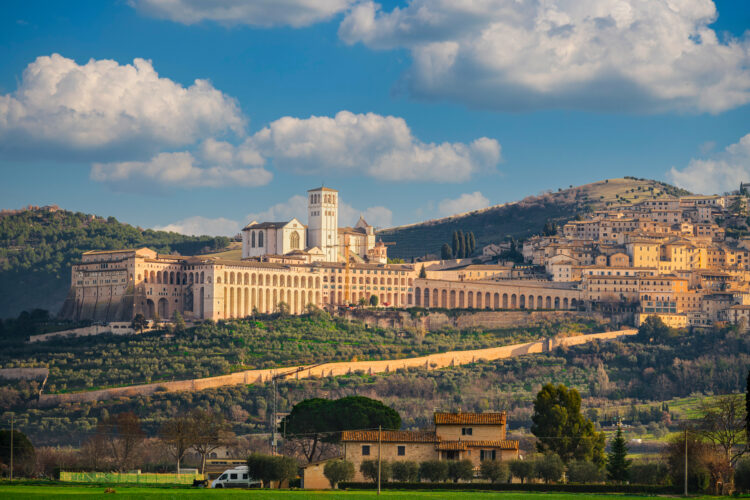
The town sits in the heart of Umbria, perched on the slopes of Mount Subasio, roughly halfway between Perugia and Spoleto. Central, landlocked, and surrounded by rolling greenery, it’s quietly set apart from Italy’s coastal rush. From the town, the Valle Umbra sprawls below – a gorgeous patchwork of olive groves, vineyards, and medieval villages.
Assisi’s location matters. Unlike some hill towns that feel remote or hard to reach, Assisi is easily accessible yet never feels crowded. It’s close enough to Umbria’s main towns to visit easily, but once you’re inside those medieval walls, the modern world feels miles away.
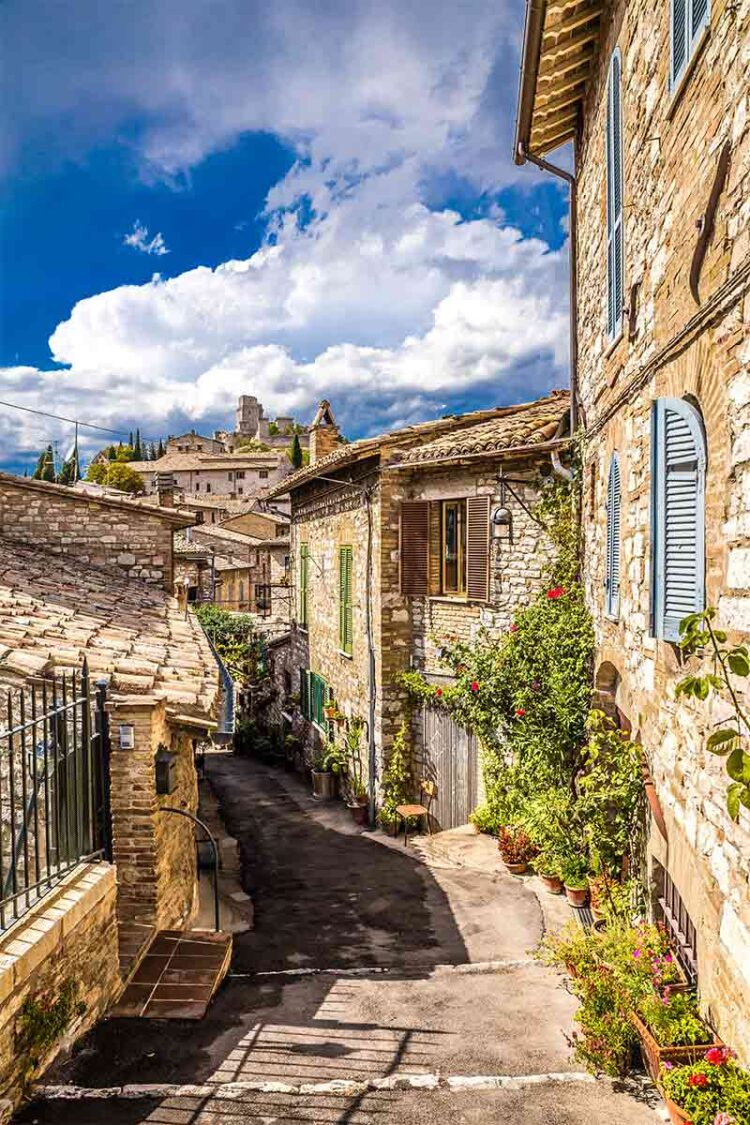
The Basilica is the obvious highlight, but Assisi has plenty more to explore. Its historic centre is full of narrow, flower-lined streets and warm stone buildings that have barely changed since medieval times. Wander through them without a map and you’ll find hidden piazzas, artisan workshops, and fabulous viewpoints overlooking the region.
Most guests spend three to four hours in Assisi, which is more than enough time for a guided walk of the town and the Basilica, a stroll through the historic streets and piazzas, and a few stops at key landmarks. If you want to explore at a slower pace, linger in shops, or enjoy a café, allow four to five hours. Less than three hours usually feels rushed.
Comfortable walking shoes are a must – many streets are cobbled or uneven. Light, breathable clothing works well in summer, while a jacket or layers are handy in spring and autumn. A hat and sunscreen are useful for sunlit piazzas, and a small backpack or bag makes wandering the streets much easier.
When you’re visiting Assisi’s churches, shoulders and knees must be covered, as is standard in Italian religious sites. Avoid short shorts, crop tops, or sleeveless tops; a lightweight scarf or shawl is an easy way to stay respectful inside.
Timing matters. Most visitors reach Assisi in the middle of the day and drift away again by late afternoon. On a Magari escorted holiday, guests visit Assisi with a local guide who brings the town’s history to life, then have time to wander independently – away from the tour groups, at a pace that lets the place sink in.
As our local Magari Tour guide Gilberto Bionda, puts it:
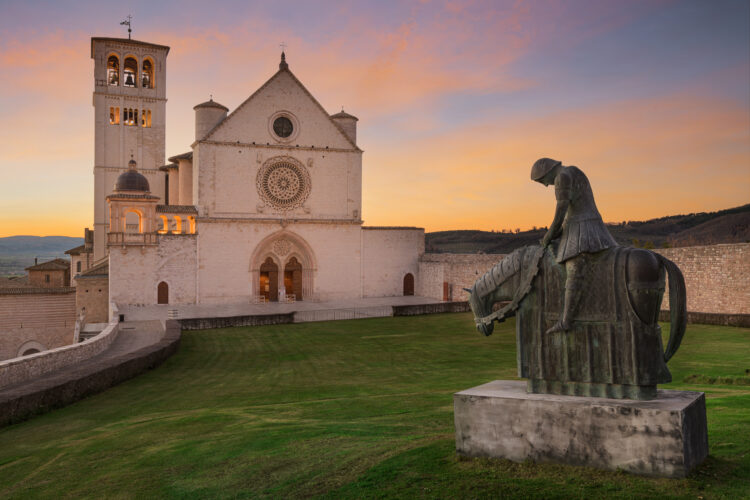
“Beyond the religious significance, Assisi is a very well-preserved medieval town. Perched on the hill, the best way to explore is to start from the top.The amazing Basilica (upper and lower) are located in the lower part of the city.
“We drop guests in the higher part of Assisi so that we walk all the way downhill. A good reason for this is to visit the other two best sights, Saint Claire to see the crucifix in the Crypt of the church which spoke to St Francis. Originally the crucifix was in a monastery, “San Damiano“ but it was transferred for security to the lovely church of St. Claire. From here is a great view of the Castle on the top of the town (Rocca Maggiore).
“Walking onwards and towards the main square, we stop at the Temple of Minerva, such splendid art of a Roman era! Then heading down to the wonderful Basilica, we visit both the sections before a little free time for shopping and exploring.
“On the drive back to the Hotel, we ask the driver to stop and have a look in the imposing church of Saint Mary of the Angels, (the village below Assisi), it’s where St. Francis passed away (3 October 1226) beside a small chapel “La porziuncola.
“All this sightseeing makes us hungry so I can recommend local delicious snacks including Pancaciato, a roll with pieces of cheese, walnuts and pepper or why not indulge in a local lunch Ghiotta style pigeon – delicious or Cacciatora style rabbit, allo spiedo (on a spit).”
The Basilica is extraordinary, but many of the most memorable moments come after. A walk back through quieter streets, or a pause on a terrace as the light fades across the hills, gives you time to take it all in. That’s the value of slow travel: space to experience a place properly, not just move between sights.

Assisi’s artisan shops offer more than tourist trinkets – though you’ll find plenty of those too. Ceramics and artisan crafts are everywhere, hand-painted in traditional Umbrian patterns. Look for plates, bowls, and tiles in the region’s familiar earthy colours: terracotta, ochre, deep greens, and blues. These make practical, beautiful souvenirs to take home.
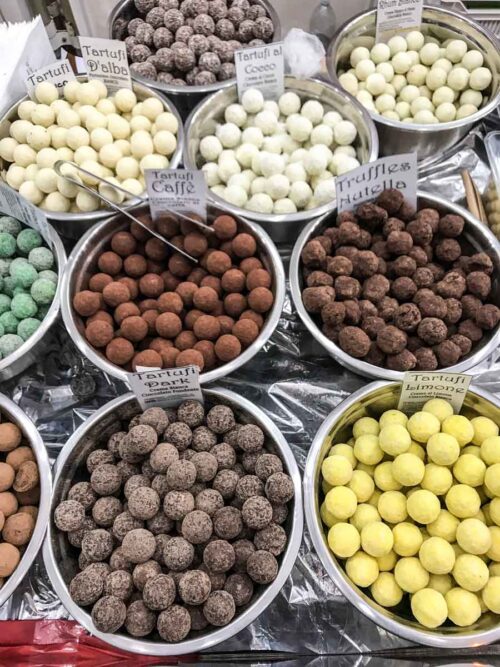
Olive oil and local food products are another highlight. Umbria produces some of Italy’s finest olive oils, and many shops in Assisi stock bottles from nearby producers.You’ll also find local wines, particularly Sagrantino and Grechetto, alongside truffles, honey, and dried pasta. These are all simple, easy to pack ingredients that bring a taste of Umbria back to your kitchen.
Many of the shops also focus on religious items: wooden crosses, rosaries, small icons and illustrated prayer books. Even if you’re not visiting for religious reasons, these are usually handmade and make thoughtful keepsakes.
If you’re planning on picking up a bottle or two of vino, we’ve put together some advice on bringing wine home from Italy, covering allowances, packing tips, and what to expect at customs.
On Magari’s 7-night Heart of Umbria tour, Assisi is visited on Day 7. By then, guests have explored Spoleto, Gubbio, Bevagna, and Orvieto, sampling local wines, meeting artisan producers, and walking through historic streets.
Assisi is a natural next step. Guests take a guided walk of the town and the Basilica, then have time to explore on their own before heading over to Spoleto for a farewell dinner.
So, is Assisi worth visiting? Absolutely – Assisi shows a side of Umbria where history, culture, and everyday life come together. This is a town that sticks with you long after you’ve walked its streets, even if you only have a few hours to explore. And that, perhaps, is what makes Assisi the most beautiful town in Italy you’ve never really walked through.
Ready to experience Assisi, and the rest of Umbria’s treasures, at the pace they deserve? Browse our Heart of Umbria tour and discover the hill towns, hidden farms, and unforgettable meals that make this region so special.
Want to chat about planning your Italian escape? Get in touch with us today, and sign up for our newsletter to hear about upcoming tours first.
https://www.magaritours.com/wp-content/uploads/2024/08/438676327_122145191696119404_7149789704513336790_n-e1724855079409-500x316.jpg
Half-moon shaped ravioli of casoncelli
Read More
https://www.magaritours.com/wp-content/uploads/2024/01/640113202-500x628.jpg
woman's hand holding a branch of an olive tree with olives, Olives on an olive tree ready for picking
Read More
https://www.magaritours.com/wp-content/uploads/2025/12/Ceri-festival-of-candles-umbria-©-marco-signoretti-500x383.webp
Ceri festival of candles, Umbria ©marco signoretti
Read More