You don’t need to speak perfect Italian to feel at home at an Italian table…

Often, one well-chosen word said with warmth does more than a whole phrasebook.

After years of bringing travellers into family kitchens, countryside masserie, and tucked-away trattorias (the Italian word for eatery​, pronounced trah-TOH-ree-ah), we’ve noticed something: the warmest welcomes go to the people who try, even just a little.

It’s the travellers who arrive with a word or two, a few simple Italian words and phrases​ used with curiosity and respect, who find themselves pulled deeper into conversation, invited back, and treated like friends, not visitors. 

Forget perfecting your pronunciation or mastering Italian grammar, with Magari, it’s the small, sincere words in Italian​ that matter most. Here are ten basic Italian words with pronunciation and common phrases in Italian​ that do exactly that – small, sincere ways to show you’re present, paying attention, and glad to be here.

1. The word that opens doors

Do Say: “Permesso” (per-MESS-oh) – “May I?”

This little word opens doors – literally. Use it when squeezing past someone at a market, entering a room, or stepping into someone’s kitchen. It’s a small word, but it shows respect and gets noticed.

While some tourists might not realise that walking through doorways without first offering the oncoming person to go first is considered a bit rude, Magari guests know to pause and say permesso. The difference makes the right impression and sets the tone for the rest of your visit.

Don’t Say: Nothing – and don’t just barge in. Even at an agriturismo where you’ve been invited for lunch, wait at the threshold and say permesso. It shows you understand you’re entering someone’s space.


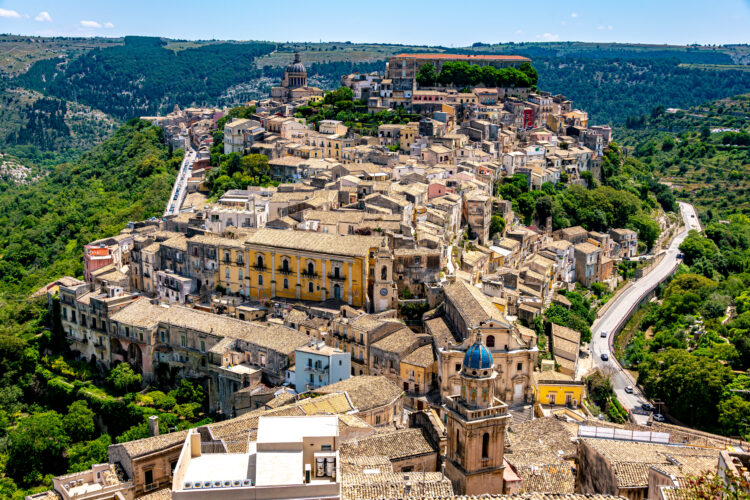
Architecture of Ragusa in Val di Noto, southern Sicily, Italy. A view from above looking over the town of Ragusa, sitting on a hill.

2. A word to keep things warm

Do Say: “Prego” (PREH-go) – “You’re welcome” (and so much more)

Prego is one of those beautifully flexible Italian words that does a lot of heavy lifting in daily conversation. It means “you’re welcome” after someone thanks you, but it also means “please, go ahead,” “after you,” or “here you are” when handing something over.

Across Italy’s old hilltowns, prego is one of the most natural parts of everyday conversation. Learn prego and you’ll sound gracious in all kinds of situations. It’s one of the most common phrases in Italian​ – warm, welcoming, and utterly essential.

Don’t Say: Just a classic British nod. Italians use prego constantly, and silence can be read as cold. Even if you’re unsure, throw in a prego with a smile – it covers most polite responses.

3. When you need someone’s attention

Do Say: “Mi scusi” (mee SKOO-zee) – “Excuse me” (formal, to one person) or “Scusatemi” (skoo-ZAH-teh-mee) – “Excuse me” (to a group or more formal)

When you need someone’s attention – a busy waiter, a market vendor, or a group of locals – mi scusi is your friend. It’s respectful, polite, and works anytime you’re interrupting or asking for help.

The plural form (scusatemi) adds an extra layer of politeness that Italians appreciate, especially when talking to strangers or anyone older than you.

Don’t Say: “Hey!” or snap your fingers – or any bad words in Italian. These are rude anywhere, but especially in Italy, where respect and manners still carry real weight. A simple scusatemi always works better than a shout.

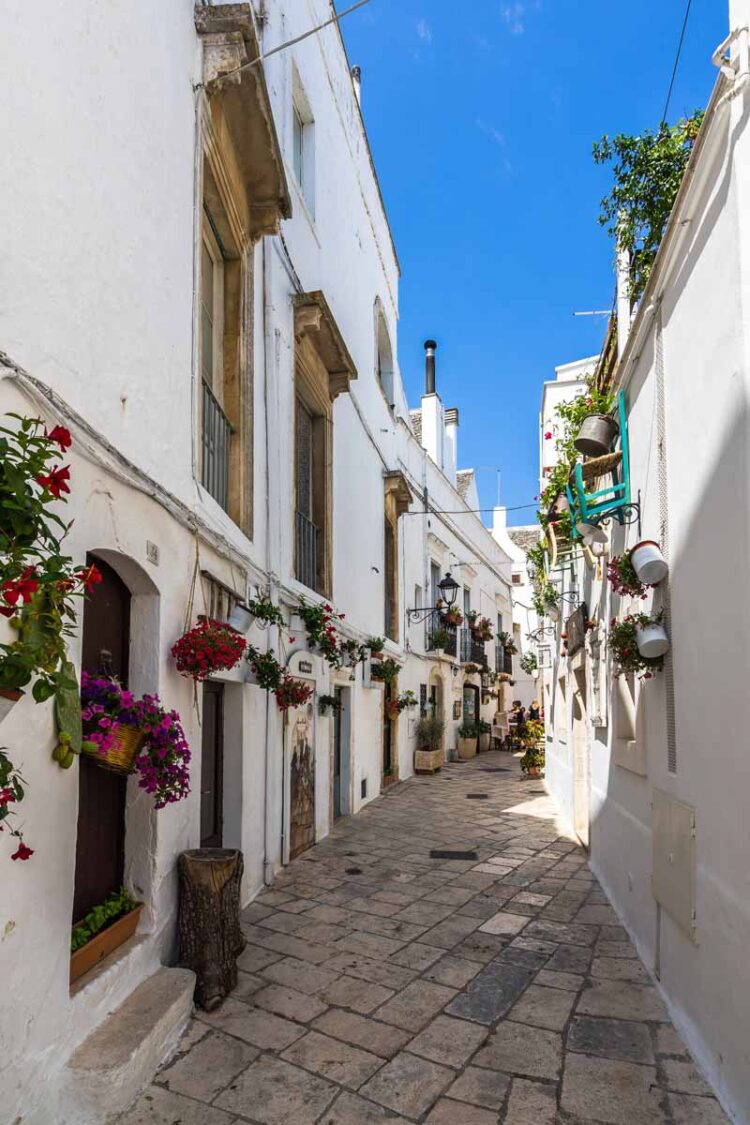
Puglia’s charming town of Locorotondo on the top of a hill in Val D’Itria with its winding streets lined with white houses and flower-filled balconies.

4. The question that shows you really care

Do Say: “È fatto in casa?” (eh FAH-toh in KAH-zah) – “Is it homemade?”

Three words in Italian that change how a meal feels. At a trattoria, asking if the pasta is fatto in casa does more than check if it’s homemade. It shows you care about how it’s made.

The word for food in Italian is cibo, but it’s less about the concept of “food” and more about how it’s prepared. Fatto in casa signals that you notice what matters: hands, time, and tradition.

Don’t say: “Is this fresh?” or “Is this frozen?” The first can sound doubtful, the second a bit rude. At most Italian kitchens, from Puglian masserie to Umbrian agriturismos, nearly everything is fatto in casa. Asking instead shows you appreciate care and craft over convenience.

5. Asking for directions

Do Say: “Dov’è [place name], per favore?” (doh-VEH… pehr fah-VOH-reh) – “Where is [place name], please?”

One of the most common phrases in italian – simple, polite, and gets you where you need to go. Follow it with grazie and you’re golden.

Don’t Say: Nothing, and don’t just stare at your phone looking lost. Ask a local. Italians love being helpful, and a simple “Dov’è…?” on those narrow white streets turns confusion into a moment of connection.

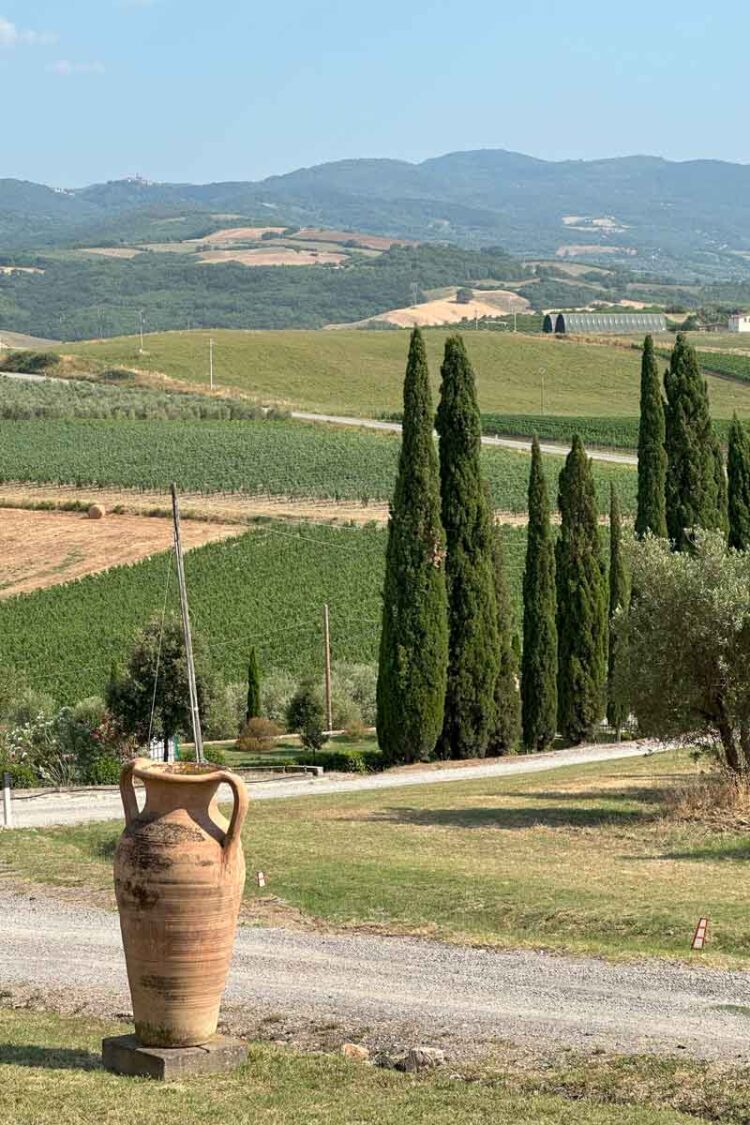
Bindella Wine Estate in the heart of the Montepulciano region with stunning views and offering visitors the chance to learn about the agronomic wine growing techniques and taste delicious wines of the region.

6. How to gently refuse more food 

Do Say: “Basta così, grazie. Era delizioso!” (BAH-stah koh-ZEE, GRAHT-see-eh. EH-rah deh-lee-tsee-OH-zo) – “That’s enough, thank you. It was delicious!”

It can feel tricky to say no at an Italian table, but this phrase is your polite escape route when someone’s piling more food onto your plate and you genuinely can’t manage another bite. 

You’re not rejecting the offer, you’re genuinely full and genuinely grateful. Basta così is polite but clear, and following it with era delizioso softens any risk of offence. 

Don’t Say: Just “No” or “I’m good.” It sounds abrupt, even dismissive. At a family table, food is how people show care – refusing without warmth can feel like rejection.

For more occasions where your words (or silence) can make all the difference, check out our article 7 Things Not to Say at Dinner in Italy – it’s all about making the right impression.

7. When something delights you

Do Say: “Che bello!” (keh BELL-oh) – “How beautiful!”

This little phrase works everywhere – spotting a view that takes your breath away, tasting something delicious, seeing a centuries-old fresco, or hearing a story that sticks with you. Che bello is straightforward, genuine enthusiasm – and Italians love it.

Don’t save it for the big moments; let it slip out whenever something delights or surprises you – even quietly. 

Don’t Say: “Nice” or “Cool.” They’re flat. Che bello is one of the prettiest Italian words, and when you’re standing staring out at the beautiful rolling hills of Tuscany, it’s the only one that fits.


8. Raise your glass the Italian way 

Do Say: “Salute!” (sah-LOO-teh) – “Cheers!” (literally “health”)

You’ll hear this every time glasses are raised, and you should use it too. Simple, warm, and essential at any Italian table. Make eye contact when you say it – that matters as much as the word itself.

It’s what friends say, what locals say, and what you’ll say without thinking after a few days in Italy.

Don’t Say: “Chin chin” too loudly or repeatedly. In Italian, it’s cin cin, and while it’s fine, it can sound touristy if overdone. Salute is authentic, unpretentious, and works everywhere.

9. Leaving the door open

Do Say: “Magari” (mah-GAH-ree) – “If only” / “I wish” / “Hopefully”

Yes, we named our brand after this word – and for good reason. Magari expresses longing, hope, and a kind of wistful optimism all at once. It’s what you say when someone asks, “Will we see you again next year?” or “Think you’ll be back?”

It’s one of the most emotionally rich Italian words about love – not romantic love specifically, but love for a place, a moment, a possibility you’re hoping will come true. 

Magari captures what we all feel at the end of a perfect meal or a perfect trip: the wish to stay longer, to return sooner. Once you start using it, you’ll find it fits more moments than you’d expect.

Don’t Say: “Maybe” or “Probably not.” They’re too definite, too final. Magari leaves the door open to possibility – which is exactly how the best travel feels.

If Italy already has a hold on you (and we’re guessing it will), we also put together a guide to the places that make you fall in love all over again.

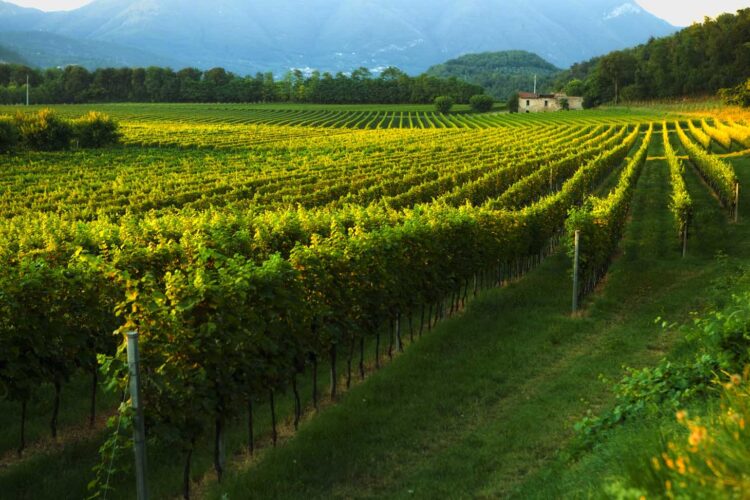
Redaelli de Zinis vines, Lombardy, a family-owned farm winery situated in the Valtenesi hills, near Lake Garda and producers of a range of mouth-watering wines.

10. How to order wine in Italy

Do Say: “Un bicchiere di vino rosso, per favore” (oon bic-YEHR-eh dee VEE-no ROH-so, pehr fah-VOH-reh) – “A glass of red wine, please.” Or “bianco” for white. 

Better yet, ask “Cosa mi consiglia?” (What do you recommend?) and let them choose. Italians take their wine seriously, and trusting the house’s pick shows you get it: wine isn’t just a drink, it’s part of the meal, paired thoughtfully with the food on your plate. In fact, in many of the best trattorie there isn’t even a written menu! We wrote about why, here: Why You Won’t Find Menus in the Best Places to Eat in Italy.

Don’t Say: “Do you have anything expensive?” or “What’s your cheapest wine?” Both miss the point. On a Magari wine tasting experience, and in the trattorias we visit, the “vino della casa” (house wine) is poured with pride. It’s local, unfiltered, and exactly what pairs with what you’re eating.

Ready to use these words at real Italian tables? Browse our Italy holiday packages and discover the meals, moments, and connections that make you feel like part of the family. 

Hospitality doesn’t stop at the table, either. The places you stay shape the welcome just as much – which is why the most memorable spots usually aren’t on the big booking sites.

For more insider stories and travel tips, visit our stories page and sign up for our newsletter. And if you’d like to chat about your next Italian adventure, get in touch today.

Read Other Stories

We're here to help

Get in touch

Charlotte Vickerstaff

We're here to help

Close form
Magari Tours
Privacy Overview

This website uses cookies so that we can provide you with the best user experience possible. Cookie information is stored in your browser and performs functions such as recognising you when you return to our website and helping our team to understand which sections of the website you find most interesting and useful.